THOR Poletest Technology
THOR Poletest® is a complete, data-driven, non-destructive testing technology for assessing the health of wooden utility poles, empowering engineers and asset managers to make faster, objective, and more confident decisions.
By replacing subjective assessments with measurable data, THOR enables users to visualize, rank, and manage networks efficiently. Now surpassing a million pole hits analysed globally, THOR Poletest® delivers reliable, repeatable, and reproducible insights into the structural integrity and serviceability of timber utility poles.
THOR Technology consists of three essential elements.
Field-testing Kit
Mobile App
THOR Portal
Field Kit
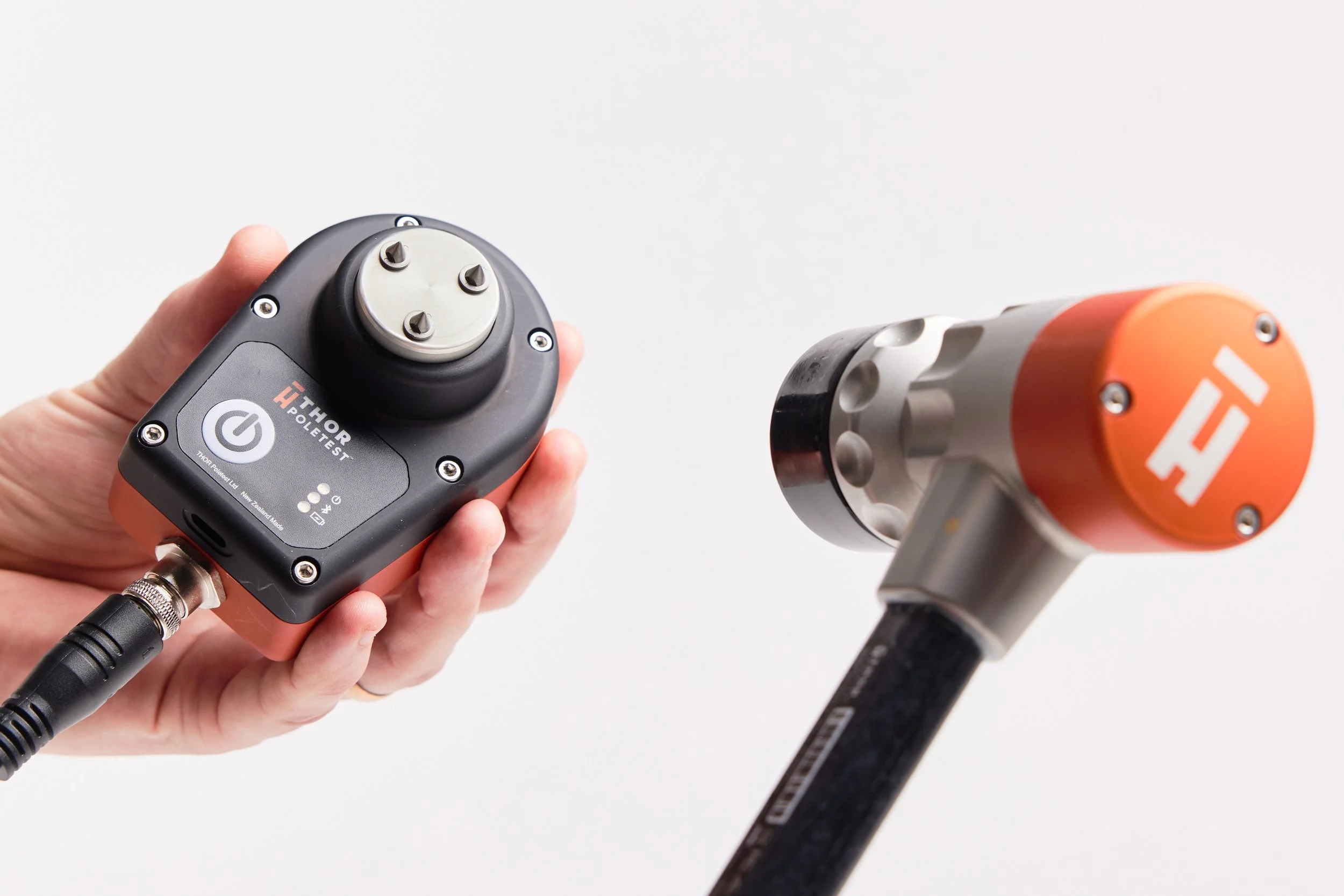
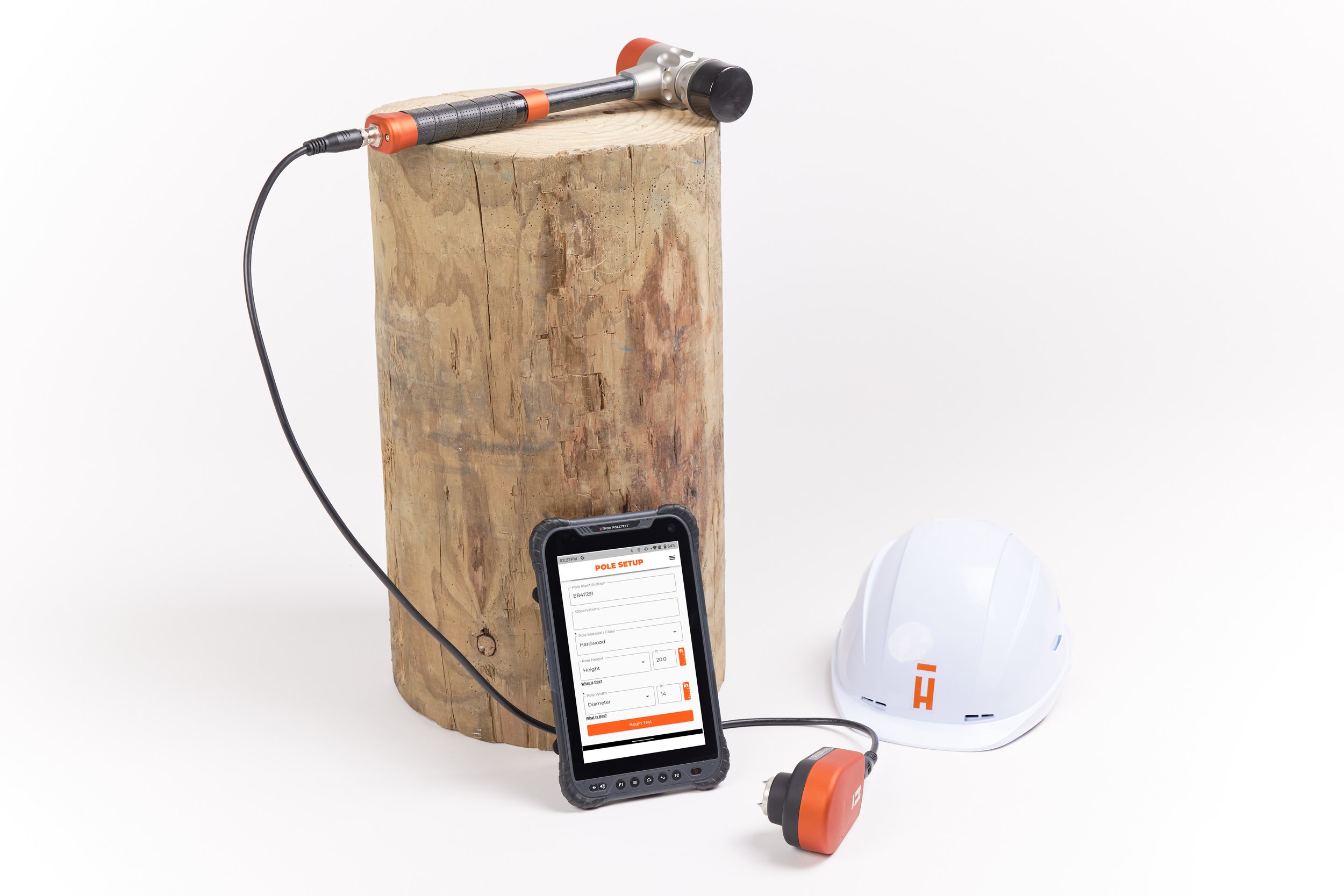
The THOR Field Kit is a rugged, IP65-rated testing tool purpose-built for field use. It comes in a durable, hand-carry protective case and includes two main components: a geophone and a hammer.
Designed for ease of transport and operation, it enables fast, non-destructive pole testing in any environment.
Mobile App

The THOR Mobile App guides users through each test with clear, step-by-step visuals. It captures pole details, confirms safety checks, and instantly displays results through an intuitive traffic light system, reflecting the assessed health condition of each pole.
Available on Android and iOS, and connected wirelessly to the field kit.
THOR Portal
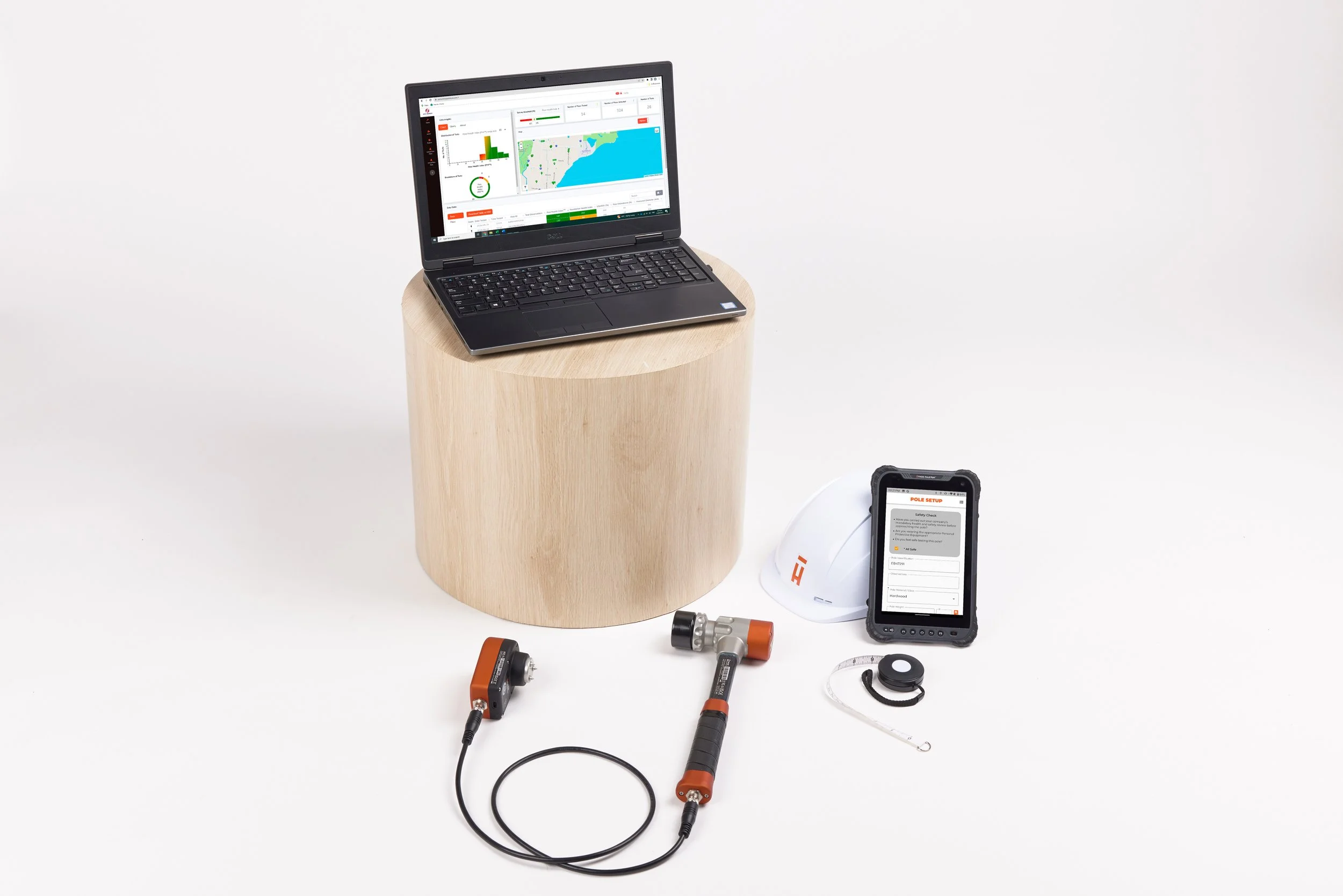
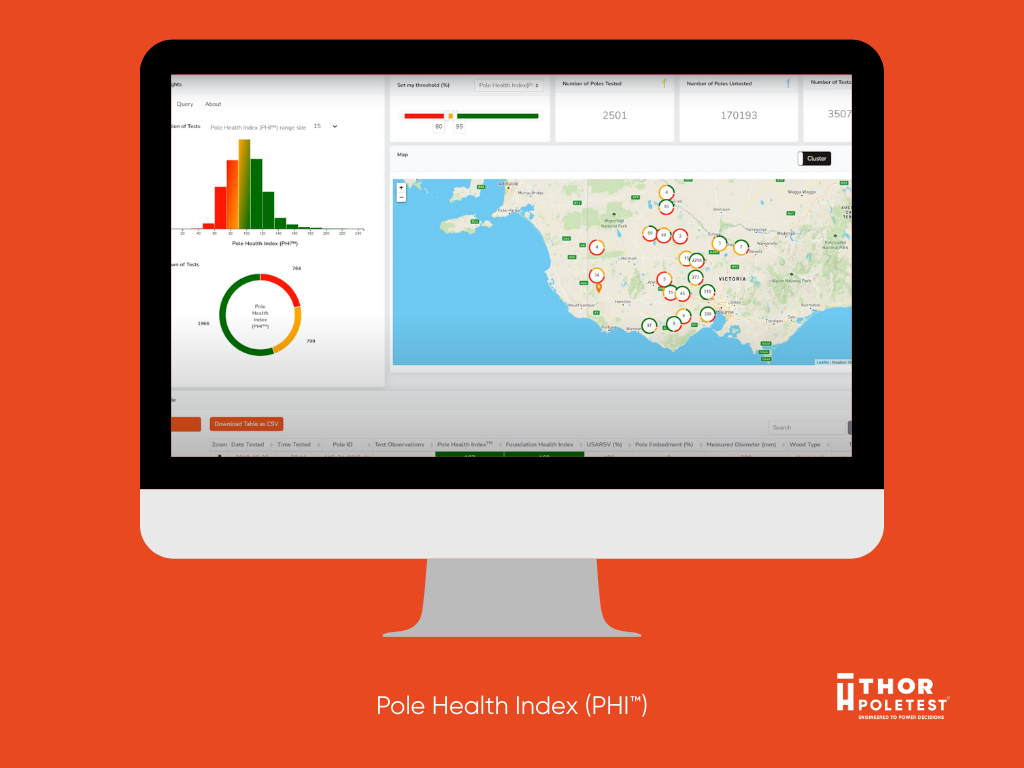
The THOR Portal offers a detailed view of your entire pole network. Users can filter and rank poles by the health index based on its condition or the region, and visualize health data through GIS mapping.
Stress Wave Propagation
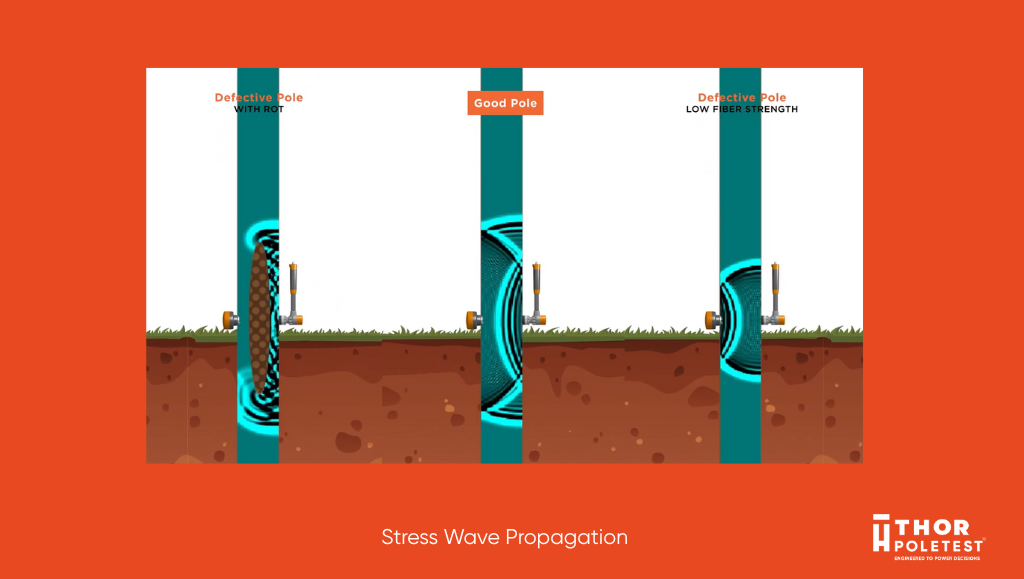
Stress Wave Propagation (SWP) is the core technology behind THOR Poletest®. Stress Wave Mobility in terms of a wooden pole refers to the movement and interaction of stress waves within the wood, especially when those waves are generated by an impact.
When a tester hits the pole with the instrumented hammer, it generates a stress wave that travels through the wood. As that wave travels and interacts with the fibres, change of density, defects, and boundaries inside the pole, its speed and amplitude change depending on the condition of the wood.
Using the THOR Field Kit, an inspector hits the pole four times to create an impact and apply stress waves. Stress waves are imparted into the pole by the impulse force. These waves propagate along the pole, and the sensor captures the response, identifying reflections from the butt, tip, and full length of the pole.
Meeting RSV Requirements
Most utilities in North America, and many globally, use Residual Strength Value (RSV) as the recognized standard for assessing the condition of wooden utility poles. RSV represents the remaining strength of a pole relative to a new one, with industry standards typically requiring poles to retain at least 67% of their original strength.
THOR Poletest reports RSV values for tested poles and visualizes them in its portal to support objective decision-making. Alongside RSV, THOR provides its Pole Health Index (PHI™) as the primary reporting metric, delivered through an intuitive traffic light system that reflects the overall health of each pole.